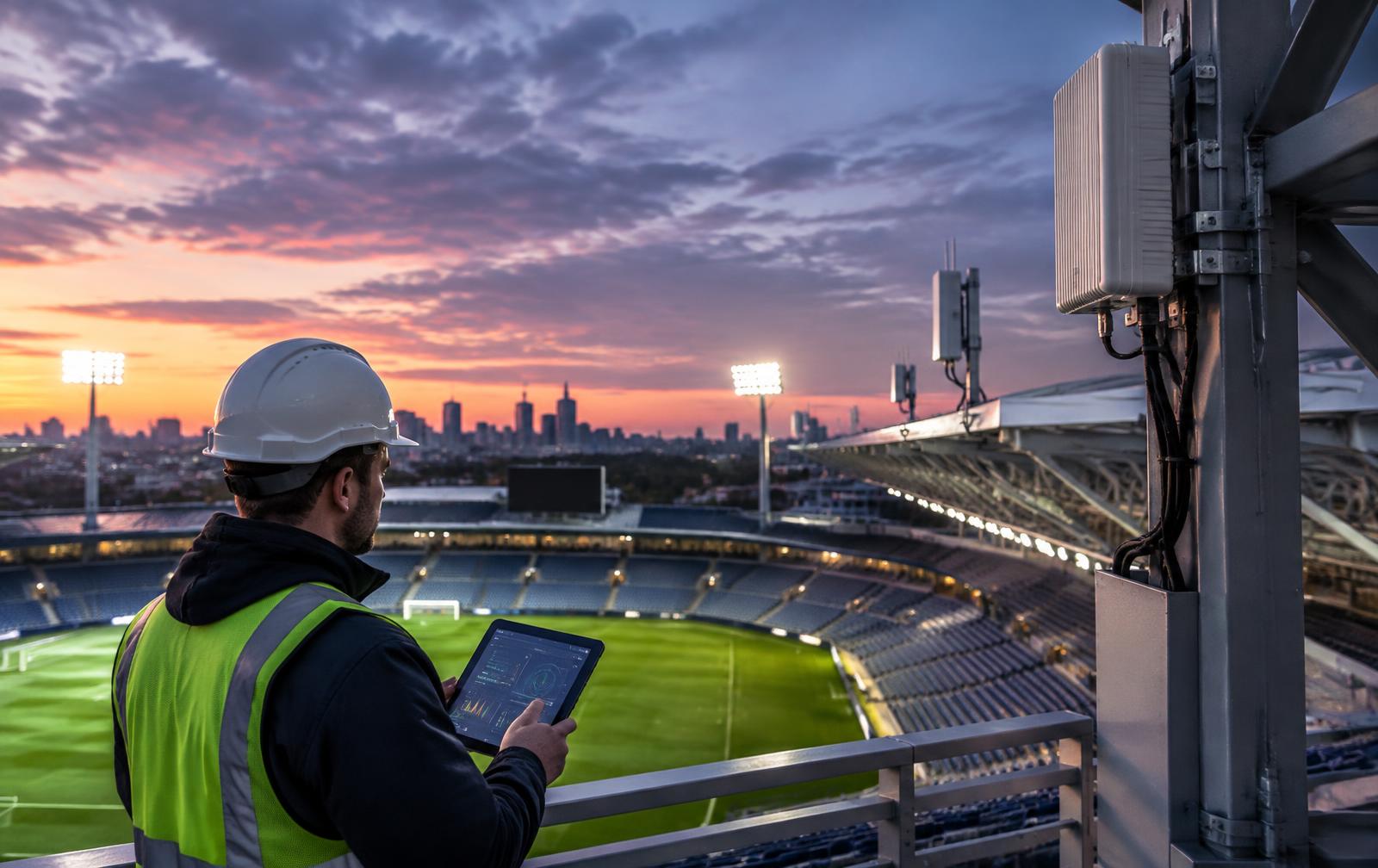
Stadiums, arenas and convention centers are increasingly treated as production facilities. Two technologies are accelerating that shift: edge computing, which processes data on site rather than in a distant cloud, and private 5G networks dedicated to a venue's own operations.
Why edge processing matters. Sending every camera feed to the cloud adds delay and bandwidth cost. Running tasks such as automated clipping, captioning or object tracking on site can reduce latency and keep sensitive footage local.
Why private wireless matters. Public networks become congested exactly when a venue is full. A private network can reserve capacity for wireless cameras, point-of-sale systems and staff communications, with more predictable performance.
Plan for spectrum and coverage. Available spectrum, licensing rules and building materials all affect performance. A proper site survey and coverage design are essential before purchasing equipment.
Design for operations, not demos. Define who monitors the network during an event, how faults are escalated and how devices are added or retired. The best technical design still depends on a trained operations team.
Measure the business case. Track production hours saved, new content formats delivered and fan experience improvements. Those outcomes justify ongoing investment far better than raw speed figures.