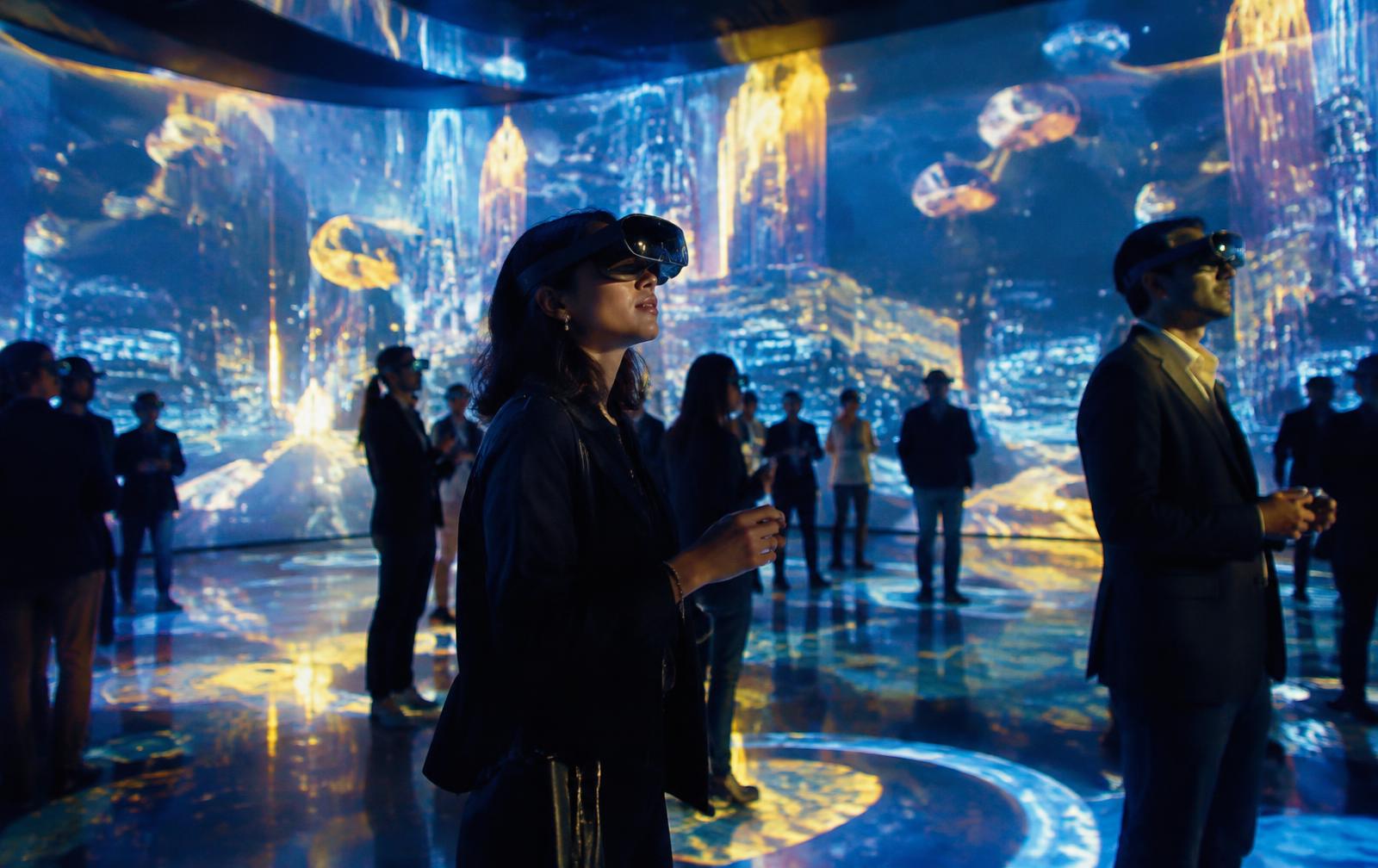
Immersive technology has moved well beyond the trade-show novelty booth. Organizations are using projection-mapped rooms, mixed reality headsets and spatial audio to launch products, train staff and tell their stories in more memorable ways.
Start with the message. The most effective immersive experiences begin with a clear purpose: what should a guest understand, feel or do afterward? Technology choices follow from that answer.
Design for throughput. A headset experience that takes ten minutes per person may serve only a small fraction of attendees. Consider group formats, shorter loops or shared projection environments when audiences are large.
Plan hygiene, accessibility and comfort. Headsets need cleaning between users, and some guests experience motion discomfort. Offer seated options, captions and an equivalent non-headset path so everyone can participate.
Capture and extend the experience. Record the environment for social media, internal communications and virtual attendees. A well-planned capture strategy can multiply the value of a physical installation.
Measure engagement thoughtfully. Dwell time, follow-up actions and post-event surveys show whether the experience achieved its purpose. Collect data with clear consent and minimal personal information.