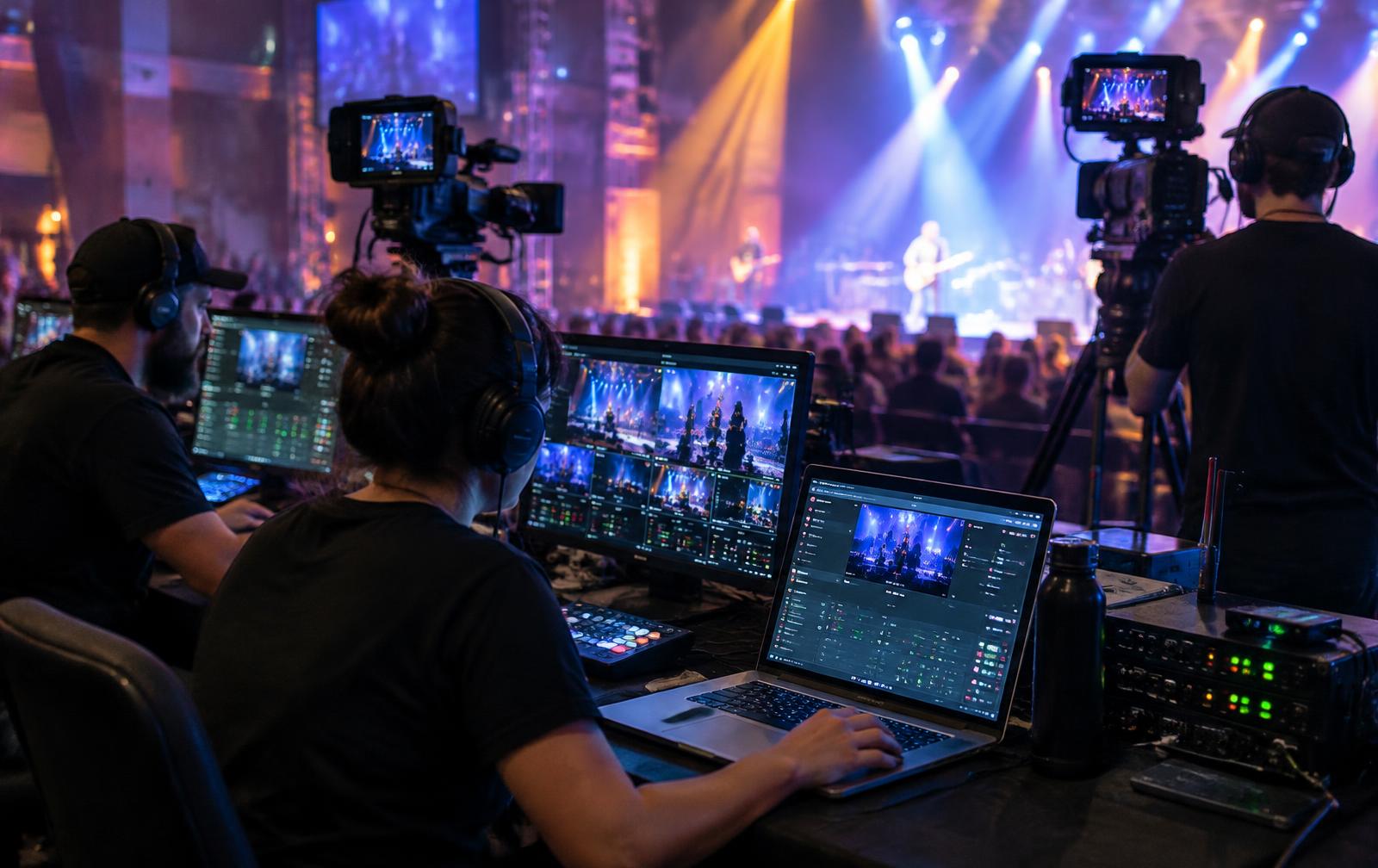
A successful rehearsal should test more than whether the stream plays. It should establish what the team will do when a camera feed disappears, an encoder stops or the venue’s internet connection becomes unstable.
Start by defining the service viewers actually need. Audience size, viewing devices, geographic reach, accessibility, acceptable delay and the consequences of interruption all influence the design. A town-hall webcast and an interactive production may require different compromises between latency, quality, complexity and cost.
Then map the complete delivery chain: acquisition, audio, encoding, connectivity, processing, distribution and playback. Identify shared dependencies. Two encoders using the same power supply and internet circuit still leave important common failure points.
Cloud-service documentation illustrates why “redundant” needs a precise definition. AWS distinguishes automatic input failover, which addresses upstream source or connection failures, from pipeline redundancy within MediaLive’s processing workflow. These are separate protections; choosing one does not automatically provide the other.
Turn that distinction into a practical test plan. Disconnect the primary contribution path, stop an encoder and verify the backup audio feed. Observe what reaches the audience, not just whether equipment reports a successful switch. Record recovery behaviour, any visible interruption and the steps required to return to normal operation.
Monitoring should also distinguish a transport failure from a content failure. A connected stream can still contain black pictures or silence. MediaLive’s documentation describes configurable failover conditions for input loss, black video and audio silence. Appropriate thresholds depend on the programme: a deliberate fade or quiet passage should not automatically be treated as a fault.
Finally, rehearse the human response. Name the person authorised to switch paths, prepare audience messages, confirm escalation contacts and keep a locally accessible runbook. Check playback on representative devices and networks.
After the event, review viewer-facing evidence alongside system logs. Update the plan with what actually happened. Reliability is not a label attached to equipment; it is a set of design choices, tested procedures and responsibilities that must work together.